
A quick guide to creating PDFs in under 10 minutes to grow your Substack
You don't need to spend hours in Canva. With the right tool, your next PDF takes 10 minutes and looks like it didn't.

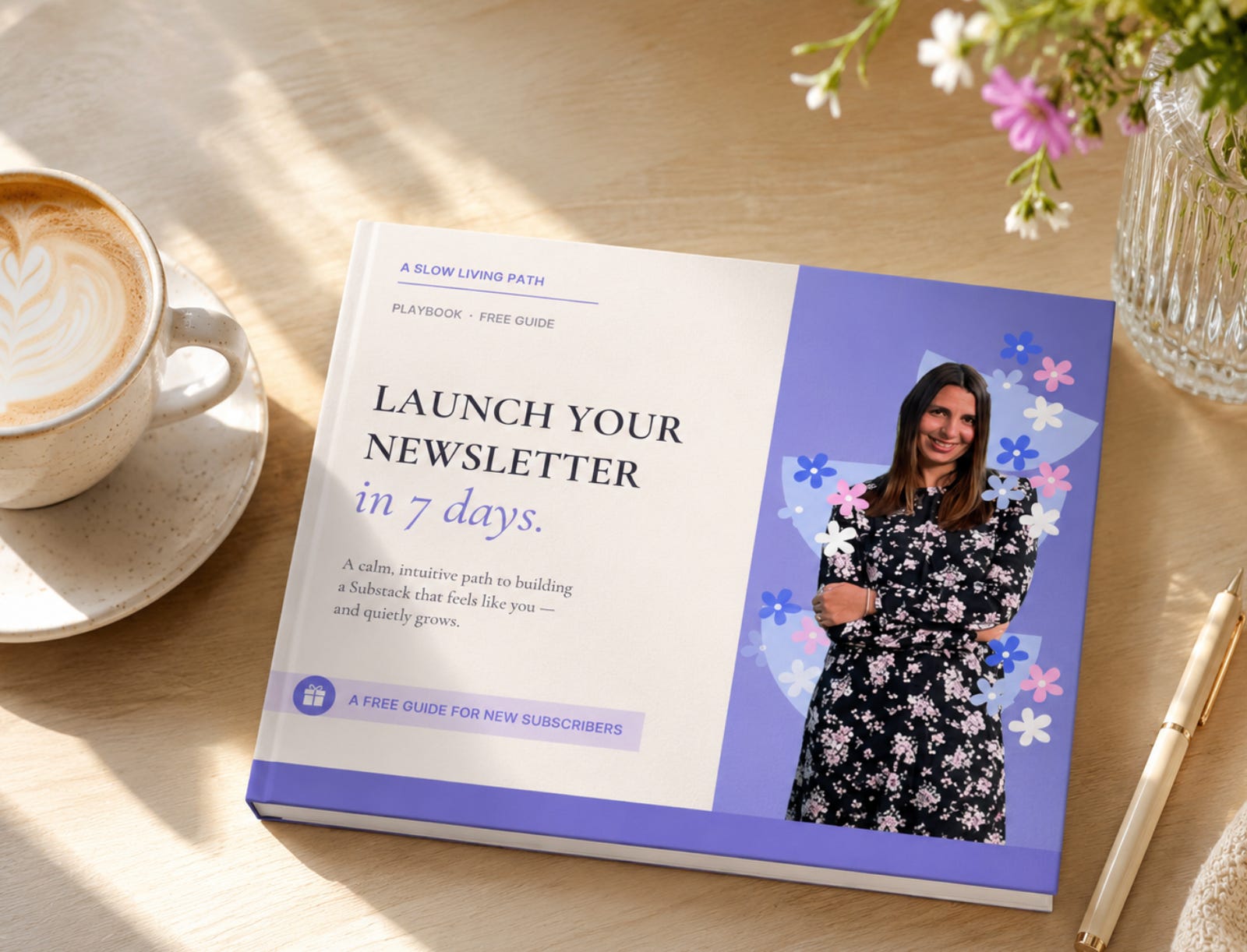
I’ve created a free PDF resource, a beginner-friendly launch plan to help you start your Substack. Subscribe to my newsletter to get access. You’ll receive a welcome email, and this guide will be waiting for you as a gift.
There’s a question I get asked all the time about Substack.
How do I get more subscribers?
And it’s a fair question. A real question. But it’s not usually the first question that matters.
The more important question is the one that actually changes what you create, how you show up, and whether people stay — is this:
How do I make the subscribers I already have feel something worth paying for?
Because what I’ve noticed after ten months of building this newsletter to almost 3,000 subscribers. The newsletters that convert free readers to paid aren’t always the biggest ones. They’re the most trusted ones. The ones where the reader feels genuinely accompanied. The ones that feel less like a broadcast and more like a letter from someone who has been thinking carefully about your exact situation.
And one of the quietest, most underused ways to build that kind of trust on Substack?
A well-crafted PDF’s.
Your Newsletter Isn’t Just an Email
When you think about what you actually send when you hit publish on Substack, it’s easy to think: I wrote a post. I pressed send. It went to inboxes.
But that framing undersells what you made.
A Substack post lives in someone’s email. It lives on your publication page. It gets archived. It gets searched. And with the right intention behind it, it can live on a desk, in a folder, in a printed notebook — because your reader saved it. Referenced it. Came back to it.
Your newsletter isn’t just an email. It’s a piece of work. Something worth keeping.
That shift in thinking is the foundation of everything here.
Are PDFs Dead? Let’s Be Honest.
There’s a lot of content online right now telling you that PDFs are over. That no one opens them. That static content doesn’t convert anymore.
Some of that is true — in some contexts.
Generic PDFs are absolutely tired. The 47-page ebook that covers everything and nothing. The checklist that could apply to anyone. The guide that took weeks to design and got downloaded twice and never opened. That kind of PDF is, yes, largely dead.
But a specific, beautiful, purposeful PDF? One that answers a question your reader has been sitting with? One that they can print, annotate, return to?
That’s not dead. That’s rare. And rare things get noticed.
The data actually backs this up. Downloadable resources — especially checklists, workbooks, and short guides — still rank among the highest-converting formats when the topic is tightly aligned to the reader’s actual need. The problem was never the PDF. The problem was the misalignment between what was offered and what was actually wanted.
Five Strategic Ways to Use PDFs on Substack
This is where intention meets execution. Here are five ways to use PDFs that actually serve your readers and support your growth.
1. The Welcome Resource
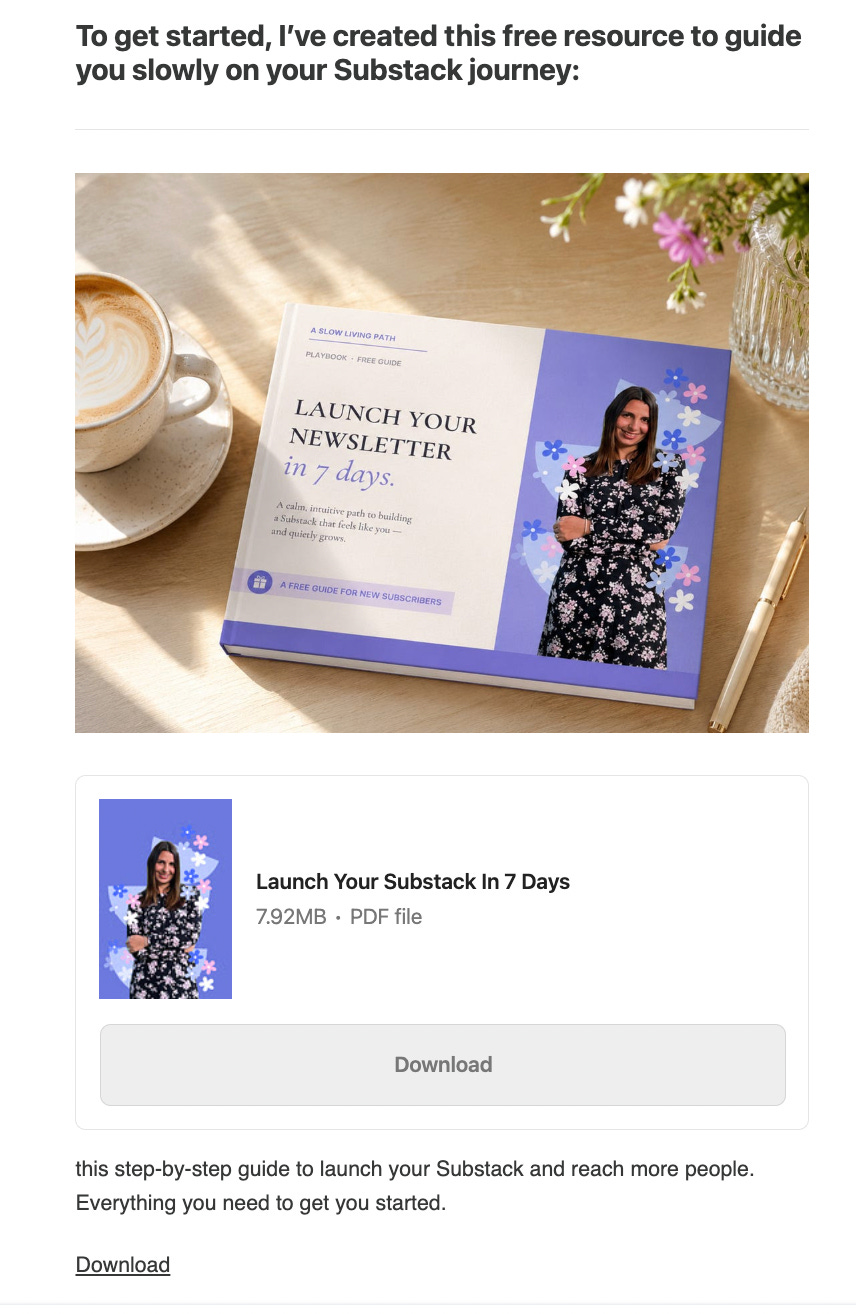
When someone subscribes, you have thirty seconds of peak attention. Use it. A simple PDF — a “start here” guide, a list of your best posts, a reflection exercise tied to your newsletter’s core theme — makes a first impression that feels generous and considered. It says: I made something for you specifically.
So here’s how I’m using it. I’ve created a free PDF resource for every new subscriber who joins my publication. They receive a simple, beginner-friendly launch plan to start their Substack.
2. The Paid Subscriber Companion
Pair your regular essays with a companion PDF for paid subscribers. This doesn’t have to be elaborate. A two-page reflection guide. A planning template. A curated resource list. The key is that it transforms your written ideas into something actionable and tangible — and makes a paid subscription feel like an experience, not just “more emails.”
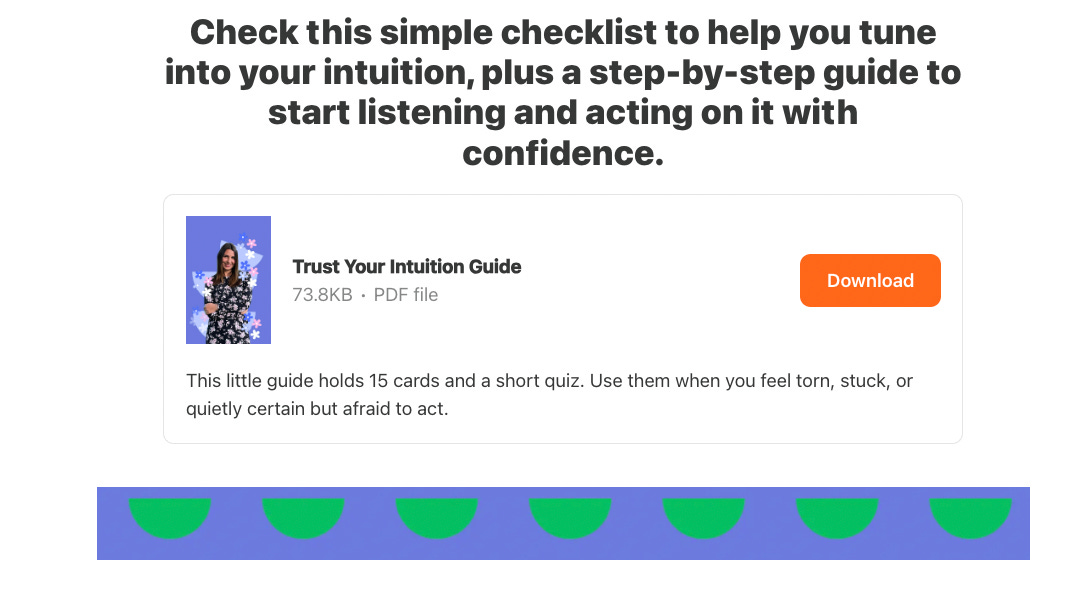
I’ve created a checklist guide that helps women tap back into their intuition. It includes 15 cards designed to guide them towards making a decision. This gives them a simple, structured way to quiet the noise, trust their own thinking, and move forward with more clarity and confidence. This is included in my newsletter for paid subscribers.
3. The Seasonal or Milestone Resource
Create a quarterly workbook. A “New Year, New Direction” planning guide. An end-of-season reflection template. These feel like gifts. They get shared. They bring in new readers who wouldn’t have found you otherwise. And they position your newsletter as something with rhythm and intention — not just a stream of posts.
4. The Deep-Dive Companion
When you write a particularly long, strategic, or complex essay, create a one-page summary PDF your readers can print and refer back to. This is especially useful if your content is practical — frameworks, processes, strategies. A visual summary reinforces what you wrote and makes it more usable.
A quick note on actually making the thing.
I know what’s going through your head right now. This sounds lovely, but I don’t have hours to design something.
You don’t need them. I create mine in under ten minutes. Seriously… you don’t need Canva or any complicated design tools either..
Join as paid subscriber to learn how you can create beautiful pdfs in minutes.
