

Substack SEO: How I Got 1,000 Visitors From Google


When I first started writing on Substack, growth wasn’t the goal. Writing was.
After years working as a marketer, I was burnt out from strategies, frameworks, and five-step plans designed to hit results on fixed timelines. I didn’t want another system to optimise. I wanted a blank space. Somewhere I could create on my own terms and find my voice again.
So for the first few months, I simply wrote.
SEO came later.
Eventually, curiosity kicked in. I’ve written blogs that rank on Google and drive traffic, but I wanted to experiment. I wanted to see whether this was even possible on Substack, without turning it into a full optimisation project.
A few months into that experiment, this newsletter started bringing in around 800 clicks a month, with nearly 50 posts published ( not all posts are optimised for seo)
In the last three months, Google has quietly brought over 1,000 readers to my Substack. Not from viral Notes. Not from chasing trends. From posts I wrote months ago and almost forgot about.
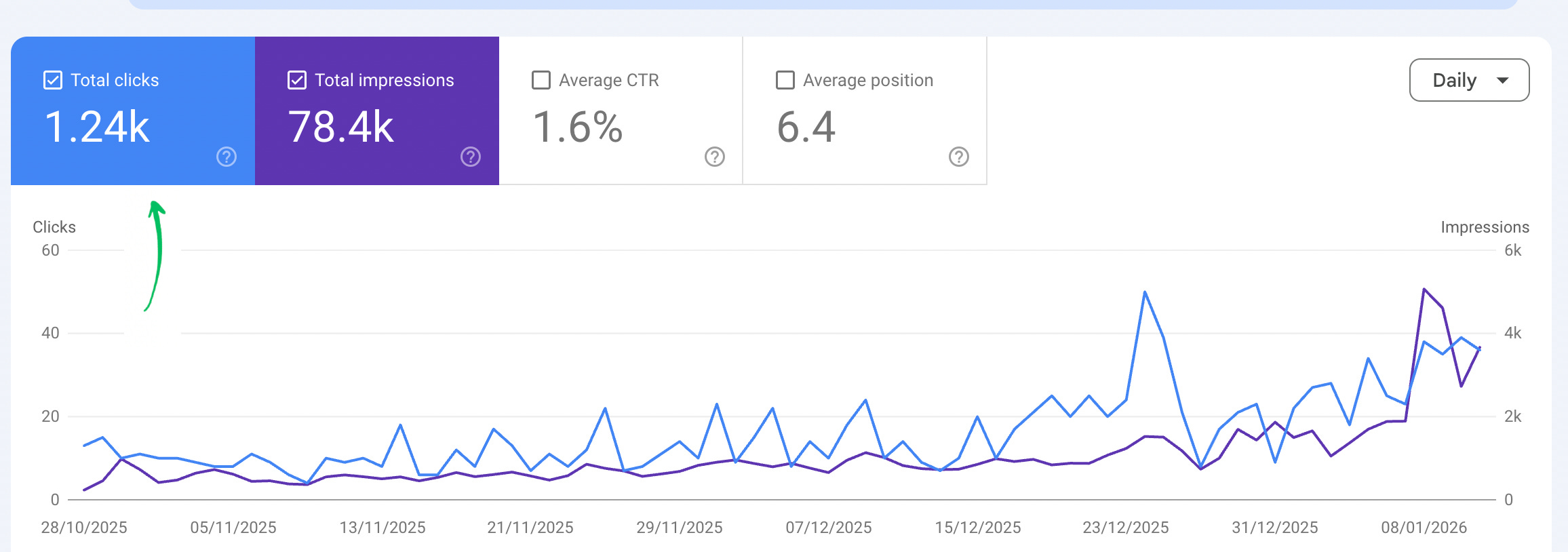
So I’m going to spill the beans on how I approach Substack SEO. This post breaks down what SEO actually is, why it works so well on Substack, and how I’ve applied it, along with how you can do the same to grow your publication.
If you take one thing from this post, let it be this: you don’t need to optimise everything. A handful of searchable posts, written from experience, can quietly bring readers to your Substack for months.
Is Substack good for SEO in 2026?
I keep coming back to this question because I see so many creators feeling confused about SEO .. how it works, what it means, and whether it’s even worth it for Substack..
Short answer: yes, seo still works.
Longer answer: Substack is very good for SEO in 2026, especially if you’re writing thoughtful, long-form work.
Substack already has strong authority with Google, which means your posts have a real chance of being discovered without you needing a separate website or complicated setup. You don’t need plugins or technical knowledge. Most of the basics live right inside substack/settings. That’s why a simple Substack SEO strategy can quietly compound over time.
Also, Google is increasingly rewarding smaller blogs written by people with real lived experience. That means if you’re sharing your own experience through a Substack newsletter, you’re well positioned to see meaningful results over time.
What is SEO, really?
SEO stands for search engine optimisation. In plain terms, it’s how people find your writing when they search for something specific on Google.
For example, if someone wants to grow their Substack, they might type:
“how to grow a Substack”
SEO helps your post show up when someone is already looking for that information. It’s not about tricks. It’s about matching your writing to real questions people are asking.
A few Substack SEO benefits to know
SEO gives your writing a life beyond the Substack feed. Here’s why it’s especially effective on Substack.
1. Your work can be found outside the platform
SEO helps your writing reach people who aren’t on Substack yet. These readers arrive because they’re actively searching on Google for something specific and are ready to read.
This means someone who’s never heard of you can discover a post through search and choose to subscribe. Over time, these readers often become your most engaged and loyal audience.
2. You build authority quietly
When your posts appear in search results, you start building trust beyond your existing subscribers. Your work becomes something people return to, reference, and recommend.
Instead of feeling like a “small newsletter,” your publication grows into a library of helpful resources. That depth creates credibility and signals expertise, without you needing to position yourself loudly.
3. Substack already ranks well on Google
Substack has strong domain authority, which means it’s often easier to rank a Substack post than content on a brand-new personal website.
I’ve noticed this firsthand. When I was writing on my consultancy site, it was much harder to get visibility. On Substack, I’m already benefiting from the platform’s existing authority, which helps my posts be discovered more easily. Substack also shares its own guidance on this.
I work with a small number of creators to help them build their creative business dreams. If you’d like more hands-on support, Substack audits are available here.
Or, if you prefer to learn alongside me, you can become a paid subscriber and follow how I’m building in real time.
How I apply simple Substack SEO
I didn’t start using SEO from day one. For the first two months, I focused purely on writing. In month three, I started being more intentional, especially with posts that were naturally searchable.
Check my Substack SEO example’s newsletters :
How a Substack homepage post started bringing in traffic
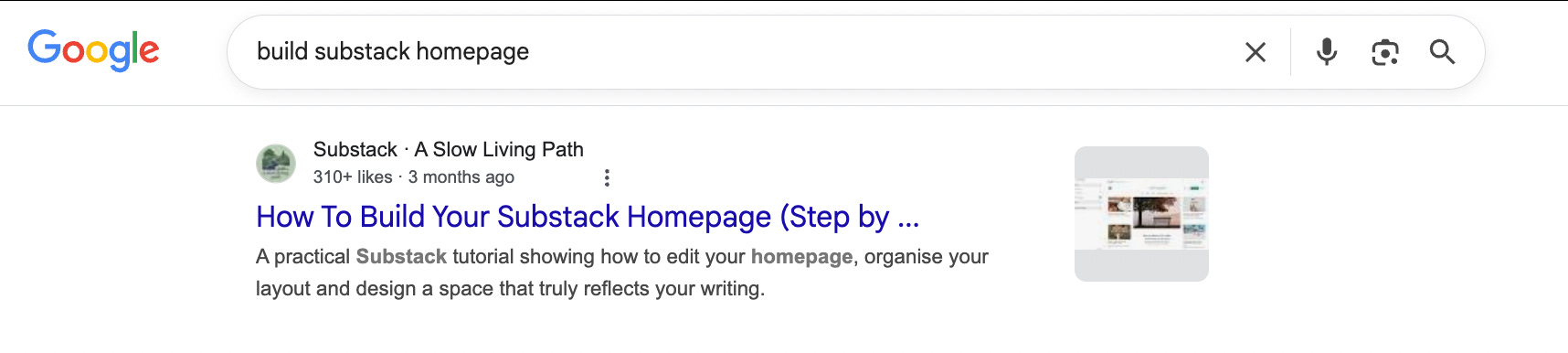
I knew people were searching for how to build a Substack homepage. It’s one of the first things new writers try to figure out. So I wrote a post answering that exact question. Over time, that post became one of my most-read pieces on Substack. A big part of that is because it ranks in Google search results and continues to bring new readers.
A Substack banner post ranking on Google
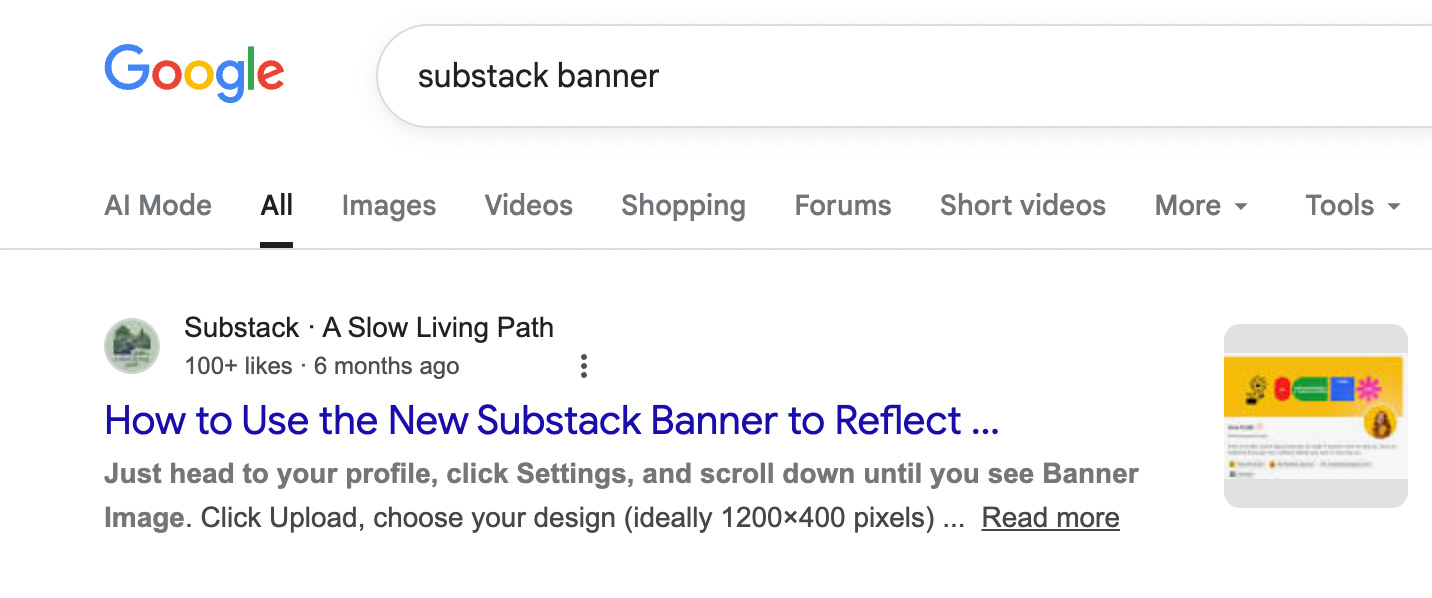
I also wrote a post about how to create a Substack banner. Again, this was something I knew people were actively searching for. I applied the same SEO optimisation on Substack. That post now appears on the first page of Google. When people search for help with Substack banners, they land directly on my content and discover my publication that way.
A reflective post that still benefits from SEO
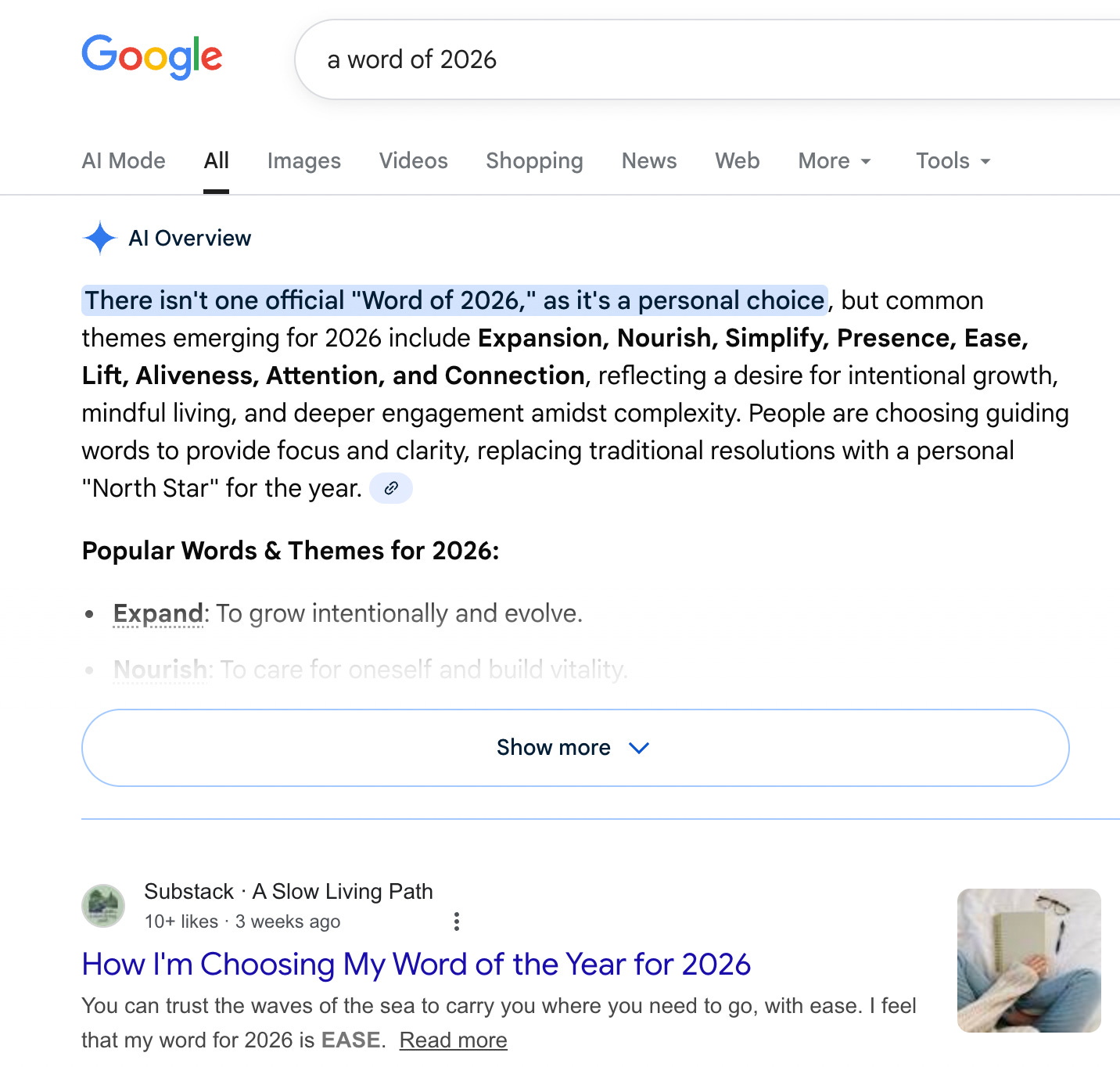
SEO isn’t only for tutorials. At the end of the year, I wrote a more reflective post about choosing my word for the year and following my intuition. It was personal, slow, and not written with performance in mind. But I still added a light layer of SEO . That post now also brings visitors to my publication. It shows that SEO doesn’t have to flatten your voice to work.
Using SEO to support my service page and get clients
